IT Sector Tug-of-War: AI Boom or Bust for TCS, Infosys?
Key Takeaways:
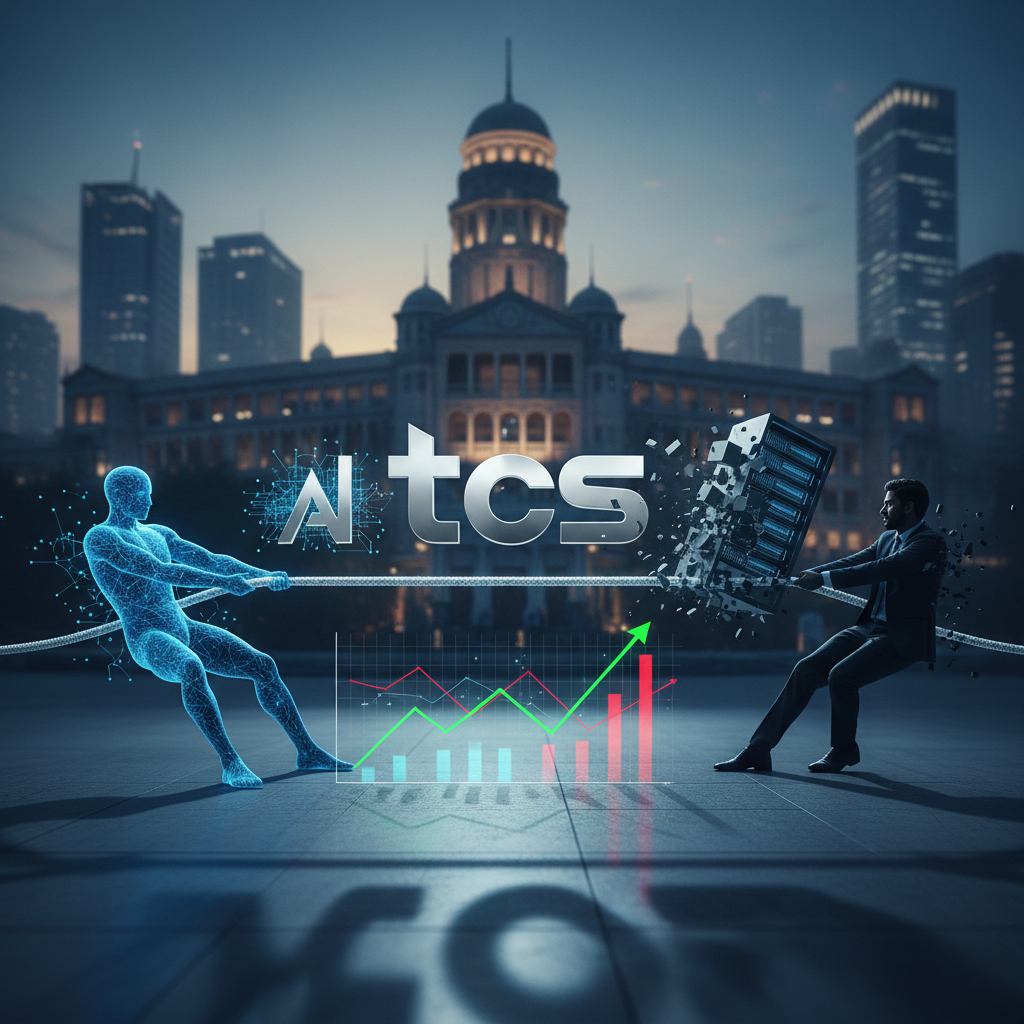
- **AI Optimism vs. Disruption:** The Indian IT sector is currently experiencing a significant tug-of-war between optimism surrounding increased AI and cloud spending, and concerns over AI's potential to disrupt traditional business models and lead to job displacement.
- **Global Tech Spillover:** Indian IT stocks remain highly sensitive to global technology trends and client spending, with any weakness in U.S. tech stocks quickly impacting Nifty IT.
- **Restructuring & Layoffs:** Recent reports of global tech firms restructuring and implementing layoffs in India are reinforcing market views that the sector is shifting towards AI-driven efficiency rather than broad-based hiring.
- **Policy Support:** Government discussions around raising the safe harbour threshold and setting a 15.5% safe harbour margin for IT services could offer marginal sentiment support, but AI and global factors remain the primary drivers.
- **Market Debate:** The central question driving today's market moves is whether AI will ultimately increase demand for Indian IT services or fundamentally alter the sector's business model.
Indian IT at a Crossroads: Is AI a Catalyst or a Threat?
The Indian IT sector finds itself at a critical juncture on 2 September 2026, grappling with a fundamental question that is splitting market sentiment: will the Artificial Intelligence (AI) revolution be a powerful demand driver, or a disruptive force that reshapes and potentially shrinks traditional outsourcing models? Today's market movements reflect this intense debate, with some IT majors experiencing renewed buying interest while others face selling pressure amid global tech anxieties.
The narrative unfolding across the sector is complex. On one hand, there's a palpable optimism that the accelerating pace of AI adoption and cloud spending will translate into new project pipelines and robust demand for specialized services. This sentiment is driving investors to selectively rotate into certain beaten-down software names, anticipating a revival in enterprise technology expenditure. However, a powerful counter-narrative is also at play. Fears of AI's disruptive potential — particularly its ability to automate tasks traditionally handled by human capital — are weighing heavily on valuations. When global tech sentiment falters, these worries amplify, leading to sharp sell-offs in Indian IT stocks.
Why is the IT Sector Trending Today?
The current buzz around the Indian IT sector isn't driven by a single event, but rather a confluence of interconnected factors that highlight its evolving landscape. The market is aggressively repricing expectations, attempting to discern the long-term implications of AI and global economic shifts.
AI Spending Optimism: A significant portion of the current rally in select IT stocks stems from the belief that enterprises worldwide are increasing their AI and cloud technology budgets. This renewed focus on digital transformation, accelerated by AI capabilities, is expected to create new opportunities for Indian IT service providers. Investors are betting on companies that can pivot quickly to offer cutting-edge AI integration and development services.
Global Tech Volatility: Indian IT companies are deeply integrated into the global technology ecosystem, with a substantial portion of their revenue tied to U.S. and European client spending. Consequently, any significant movements in global software stocks, particularly in the U.S., tend to have a direct and often amplified impact on the Nifty IT index. Concerns over global economic slowdowns or interest rate hikes can quickly transmit into selling pressure.
Restructuring and Layoffs: Recent reports detailing restructuring initiatives and workforce reductions within global technology firms, including those with a significant presence in India, are adding another layer to the market's perception. While these moves are often framed as efficiency drives and a strategic shift towards AI-centric operations, they also fuel concerns about potential job displacement and the long-term impact on the traditional IT services workforce. This re-enforces the idea that the sector is undergoing a fundamental transformation.
Government Policy Discussions: On the policy front, discussions around potential changes to the tax and regulatory framework for the IT sector are also on the radar. Proposals to potentially raise the safe harbour threshold for information technology services and set a 15.5% safe harbour margin could offer some marginal support to sentiment. While not the primary driver of today's market movements, such policy clarity can help improve the operating environment for IT firms.
What TradeMine AI Says
(TradeMine AI platform analysis data was not provided for this specific sector. For real-time, actionable insights on specific stocks and sectors, please visit TradeMine AI's analysis section.)
This analysis was generated by TradeMine AI's Smart Money Concepts engine — Try it free →
Top IT Sector Stocks to Watch
As the sector navigates these turbulent waters, certain stocks are drawing significant attention. Investors are closely scrutinizing financial health, client acquisition, and AI integration strategies to identify potential outperformers and underperformers.
| Company | Market Cap (₹ Cr) | P/E Ratio | 1-Year Return (%) | Key Focus Areas |
| :------------ | :---------------- | :-------- | :---------------- | :--------------------- |
| TCS | (Data N/A) | (Data N/A)| (Data N/A) | AI, Cloud, Digital Ops |
| Infosys | (Data N/A) | (Data N/A)| (Data N/A) | Digital Transformation |
| Wipro | (Data N/A) | (Data N/A)| (Data N/A) | Consulting, Cloud |
| HCLTech | (Data N/A) | (Data N/A)| (Data N/A) | Engineering, R&D |
| Tech Mahindra | (Data N/A) | (Data N/A)| (Data N/A) | 5G, Enterprise Solutions |
Note: Specific real-time market prices and financial metrics were not available in the provided research data. Please refer to live market data for the latest figures.
Sector-Specific Catalysts on the Horizon
The Indian IT sector is poised for several potential catalysts that could significantly impact its trajectory in the coming months. Understanding these drivers is crucial for investors looking to make informed decisions.
- **Global Tech Earnings:** Upcoming quarterly earnings reports from major U.S. technology giants will provide crucial insights into the health of global client spending and the pace of digital transformation initiatives. Stronger-than-expected results could trigger a positive ripple effect across Indian IT.
- **AI Adoption Rates:** The speed and scale of AI adoption by global enterprises will directly influence demand for new IT services. Companies that successfully position themselves as leaders in AI implementation and consulting stand to gain significantly.
- **Interest Rate Decisions:** Decisions by central banks, particularly the U.S. Federal Reserve, on interest rates will continue to influence global economic sentiment and, by extension, corporate IT spending budgets. A more dovish stance could spur investment.
- **Budgetary Announcements:** Any further policy announcements in India related to the IT sector, especially those impacting taxation or incentives for technology exports, could provide additional tailwinds.
Monthly Outlook for Indian IT
The outlook for the Indian IT sector for September 2026 remains cautiously optimistic, albeit with significant volatility. The market will continue to closely monitor global economic indicators, enterprise spending trends, and the ongoing evolution of AI technologies. Companies with strong balance sheets, diversified service offerings, and a clear strategy for AI integration are likely to be more resilient.
Expect continued differentiation within the sector. While large-cap IT firms like TCS and Infosys will remain bellwethers, mid-cap IT companies with niche AI or cloud capabilities could see accelerated growth. However, the overarching theme will be the market's continuous re-evaluation of AI's long-term impact on the traditional IT services business model. Investors should prepare for potential swings based on incoming news flow and global market sentiment.
What are the biggest risks for Indian IT stocks right now?
The biggest risks for Indian IT stocks include a global economic slowdown impacting client spending, intensified competition from global tech giants, adverse currency movements, and the rapid evolution of AI potentially disrupting existing service lines and margins. Geopolitical tensions also remain a concern.
How is AI impacting demand for Indian IT services?
AI's impact on Indian IT services is dual-edged. It's creating new demand for specialized AI development, integration, and consulting. However, it also poses a risk of automating routine tasks, potentially reducing demand for traditional, lower-value outsourcing services and pressuring margins.
Which Indian IT companies are leading in AI adoption?
Major Indian IT players like TCS, Infosys, and HCLTech are heavily investing in AI capabilities, developing AI platforms, and acquiring AI startups. They are focusing on integrating AI into their existing service offerings and building specialized teams for AI-driven solutions for clients.
Will layoffs in global tech firms affect Indian IT employment?
Yes, layoffs and restructuring in global tech firms can impact Indian IT employment. While some roles might be displaced by automation or efficiency drives, there's also a simultaneous demand for new skills in AI, cloud, and specialized digital technologies, leading to a shift in the employment landscape.
What is the safe harbour threshold in the IT sector?
The safe harbour threshold in the IT sector refers to a predefined margin or set of conditions under which international transactions between related entities (like an Indian IT firm and its overseas subsidiary) are deemed to be at arm's length, thus avoiding complex transfer pricing disputes with tax authorities.
Conclusion: Navigating the AI-Driven Future
The Indian IT sector is undoubtedly in a transformative phase, with AI acting as both a beacon of opportunity and a source of strategic challenge. On 2 September 2026, the market is actively processing these dual narratives, leading to a nuanced and often volatile trading environment. While government policies offer some foundational support, the primary drivers remain the global appetite for technology spending and the ongoing integration of AI across industries.
For investors, this period demands a keen eye on evolving business models, technological prowess, and strategic partnerships. Companies that can successfully pivot, innovate, and demonstrate clear value proposition in an AI-first world are likely to emerge stronger. As the sector continues to evolve, staying informed with real-time, data-driven insights is paramount.
Unlock the power of AI-driven market analysis. Visit TradeMine.ai today for expert insights and make smarter trading decisions. Explore our features and stay updated with our latest updates to navigate the dynamic market landscape.
Disclaimer: This is for educational purposes only. Not financial advice.